
The Complete Abrasive Blasting Guide: Choosing the Right System for Your Application
For decades, the industry called it sandblasting. The name stuck long after the practice moved on. Today’s abrasive blasting systems are precise, engineered tools with media types, equipment configurations, and process variables that directly affect surface quality, coating performance, and production throughput. This guide covers what you need to know to match the right system to your application.
Why Isn’t it Called Sandblasting Anymore?
The term “sandblasting” dates back to 1870, when inventor Benjamin Chew Tilghman patented the first artificial sand blasting system. His goal was to recreate the natural erosion that occurs when wind drives sand and mineral particles across stone and metal surfaces. For about a century, the process relied on compressed air pushing silica sand through a blast nozzle.
The problem is that silica sand is dangerous. Blasting with it releases fine crystalline silica particles into the air, and when workers inhale those particles, it can cause silicosis, a serious and irreversible lung disease. NIOSH and OSHA have issued clear guidance on the risk, and the CDC has reinforced those warnings. The industrial world has largely moved away from silica sand as a blast media.
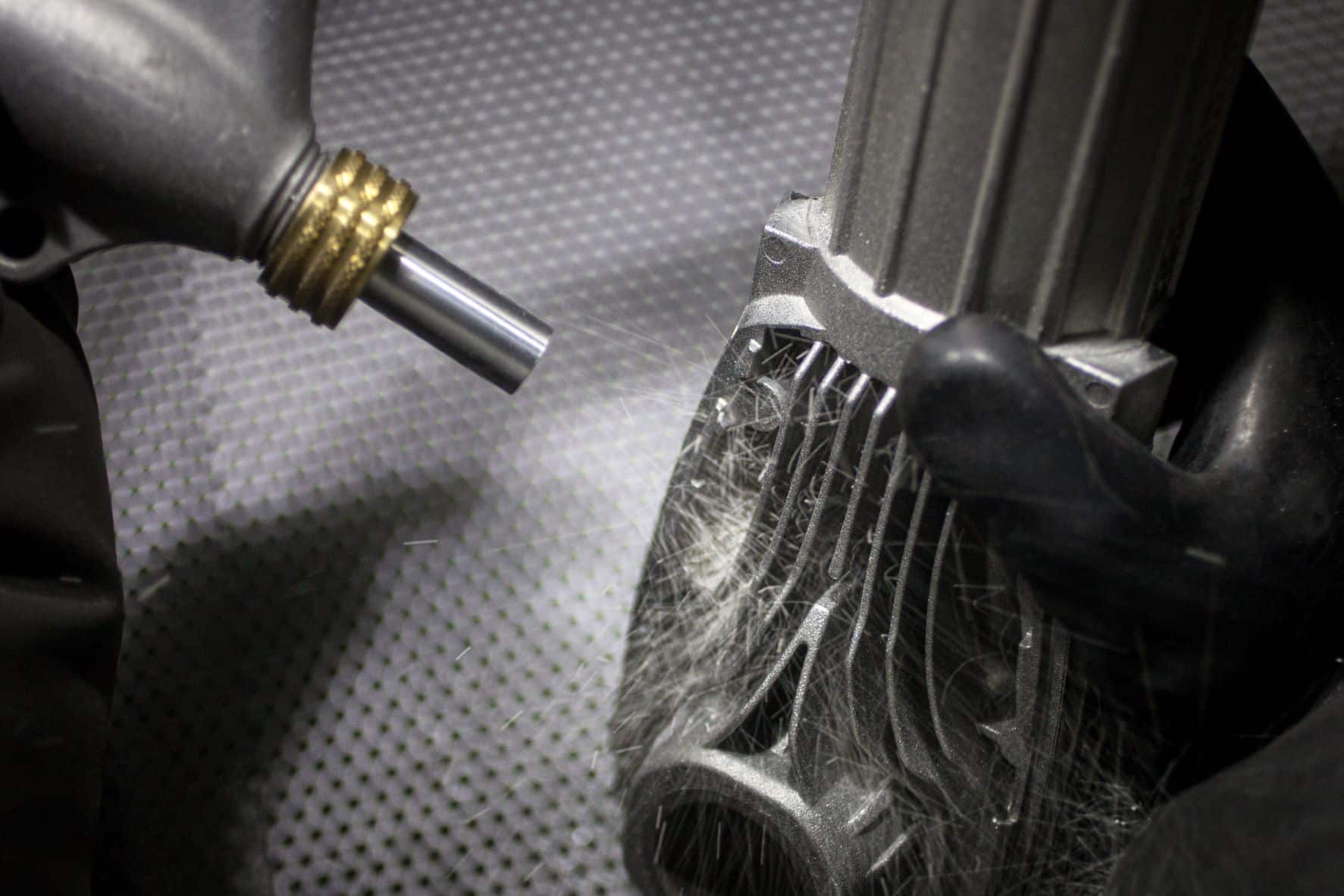
The process itself, however, is very much alive. Today, abrasive blasting is the more accurate term for what’s happening in modern surface preparation operations. It refers to any pressurized process that propels abrasive media against a surface to clean it and remove coatings, or to create a specific surface profile before a downstream finishing step. The media can be propelled by compressed air, a centrifugal wheel, or water, depending on the application.
Where Abrasive Blasting Gets Used
Abrasive blasting shows up across nearly every segment of industrial manufacturing, and the specifics of each application drive almost every decision you’ll make about media and equipment.
| Application | What It Accomplishes | Common Industries |
| Rust, Scale & Contaminant Removal | Clears rust, mill scale, and surface debris before coatings are applied | General Industrial, Oil & Gas, Infrastructure |
| Anchor Pattern Creation | Creates a micro-textured surface profile that improves coating and adhesive adhesion | Aerospace, Transportation, General Industrial |
| Shot Peening | Induces compressive stress to increase fatigue strength and resist stress corrosion | Aerospace, Defense, Automotive |
| Coating & Paint Removal | Strips old paint and coatings without damaging the underlying substrate | Maintenance, Refurbishment, Manufacturing |
| Deburring & Edge Profiling | Removes sharp edges, weld splatter, and surface inconsistencies after machining or welding | General Industrial, Automotive, Fabrication |
| Cosmetic & Decorative Finishing | Produces controlled surface textures from matte finishes to precision micro-textures | Consumer Products, Medical Devices |
| Foundry Cleaning & Restoration | Removes casting residue and handles mold, fire damage, and decorative surface work | Foundry, Restoration, Architectural |
Choosing the Right Blast Media for Your Abrasive Blasting Solutions
Media selection is where most operations make their costliest mistakes. The wrong choice damages your substrate and misses the required surface profile. It also burns through your consumable budget faster than necessary. Getting it right starts with three questions.
- What surface profile do you need? Aggressive anchor patterns require angular media that cuts into the surface. Cosmetic finishes and gentle cleaning applications need rounded media that peens and polishes without cutting.
- What substrate are you working with? Softer materials like aluminum and brass require a gentler approach than hard steel or cast iron. Plastic substrates fall into the same category. Using an overly aggressive media on soft substrates causes unwanted pitting and dimensional loss.
- Do you need reusable or single-use media? High-volume production almost always benefits from recyclable media for cost efficiency and consistency. Single-use media suits outdoor blasting and applications where reclaim isn’t practical.
Here’s how the most common media types stack up:
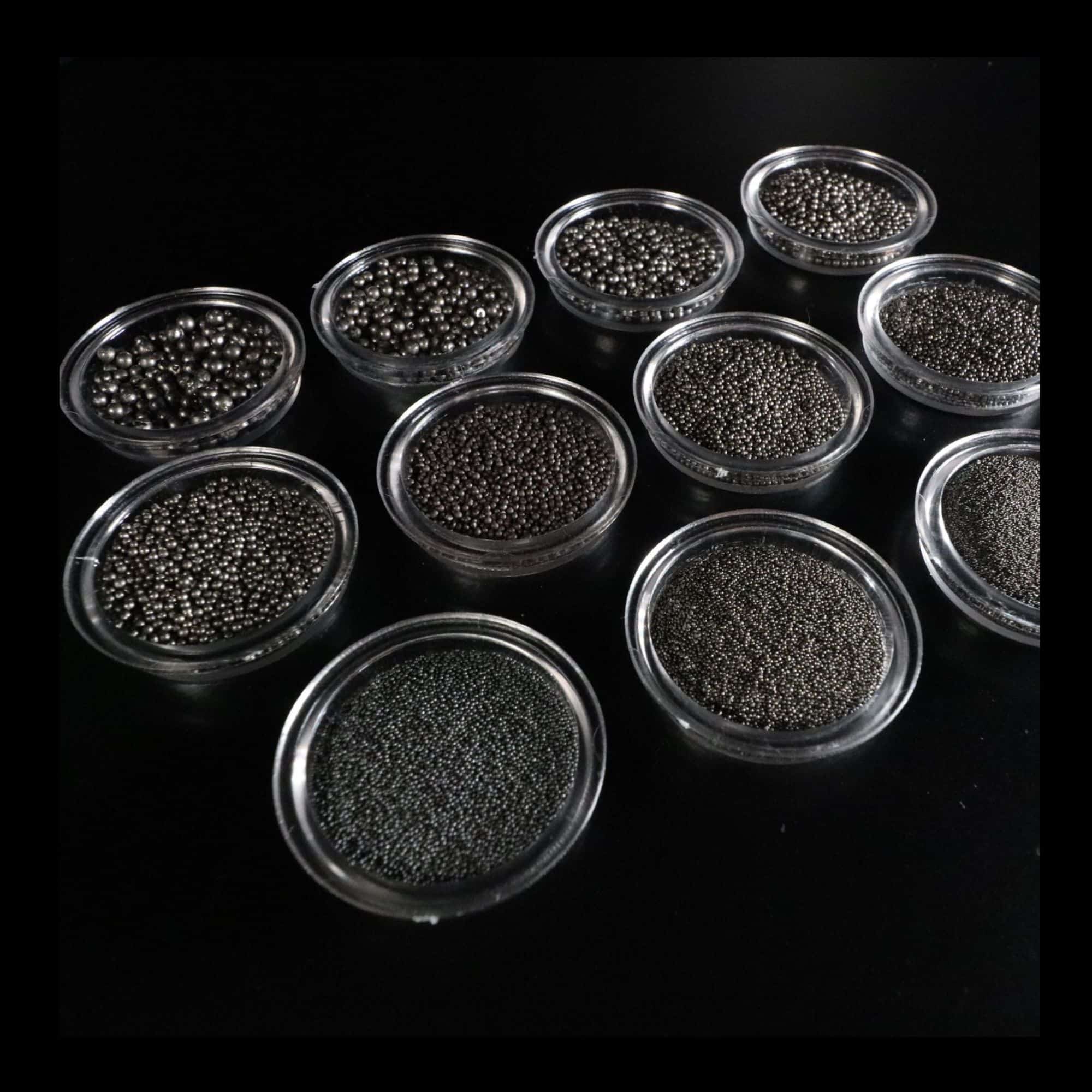
| Media | Aggressive Profile | Cosmetic / Polish | Soft Substrates | Reusable | Shot Peening | Outdoor / Field Use |
| Aluminum Oxide — Angular, hard-cutting; ideal for anchor patterns on most metals |
✓ | — | ✓ | ✓ | — | — |
| Steel Shot & Grit — Round shot for peening; angular grit for aggressive stripping | ✓ | — | — | ✓ | ✓ | — |
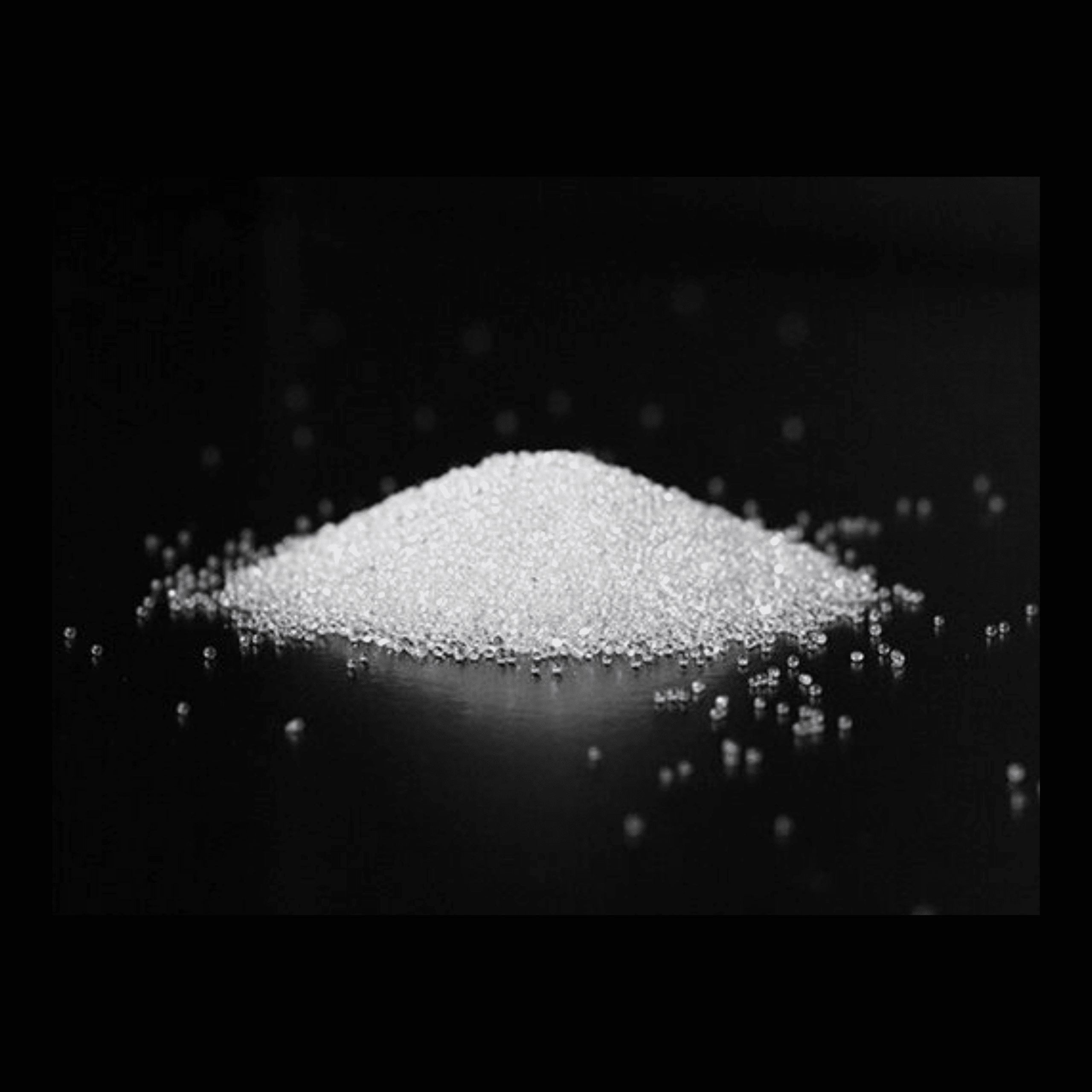
| Glass Beads — Smooth, bright peened finish without significant material removal | — | ✓ | ✓ | ✓ | — | — |
| Garnet — Angular, low-dust; effective on ferrous and non-ferrous metals | ✓ | — | ✓ | Limited | — | ✓ |
| Mineral Slags — Economical single-use media for outdoor and maintenance work | ✓ | — | — | — | — | ✓ |
| Crushed Glass — Sharp profile, clean finish; made from 100% recycled glass | ✓ | — | — | — | — | ✓ |
| Plastic Media — Gentle etching for sensitive substrates without surface damage | — | ✓ | ✓ | ✓ | — | — |
SurfacePrep maintains approximately 46 million pounds of abrasive media across our warehouse network. When you need a specific media type on a tight timeline, we can deliver it.
Abrasive Blasting Equipment: Building the Right System
Media selection is only half the equation. The right equipment depends on your part size, production volume, and the consistency your operation demands.
Air Blasting
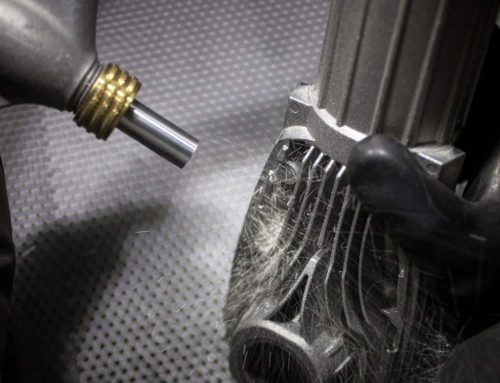
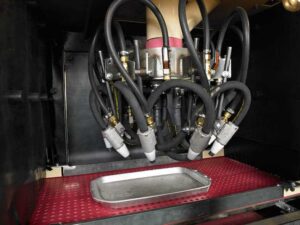
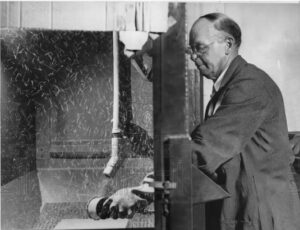
Uses compressed air to propel media against the work surface. The most flexible category, it ranges from portable blast pots for field work to large-format blast rooms for oversized structural components. Well-suited for complex geometries and applications requiring direct operator control over the blast pattern. Compatible with a wide range of non-metallic media, including glass beads and garnet, as well as aluminum oxide and ceramic beads.
Blast Cabinets
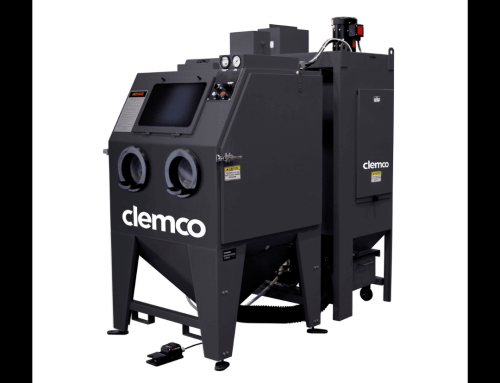
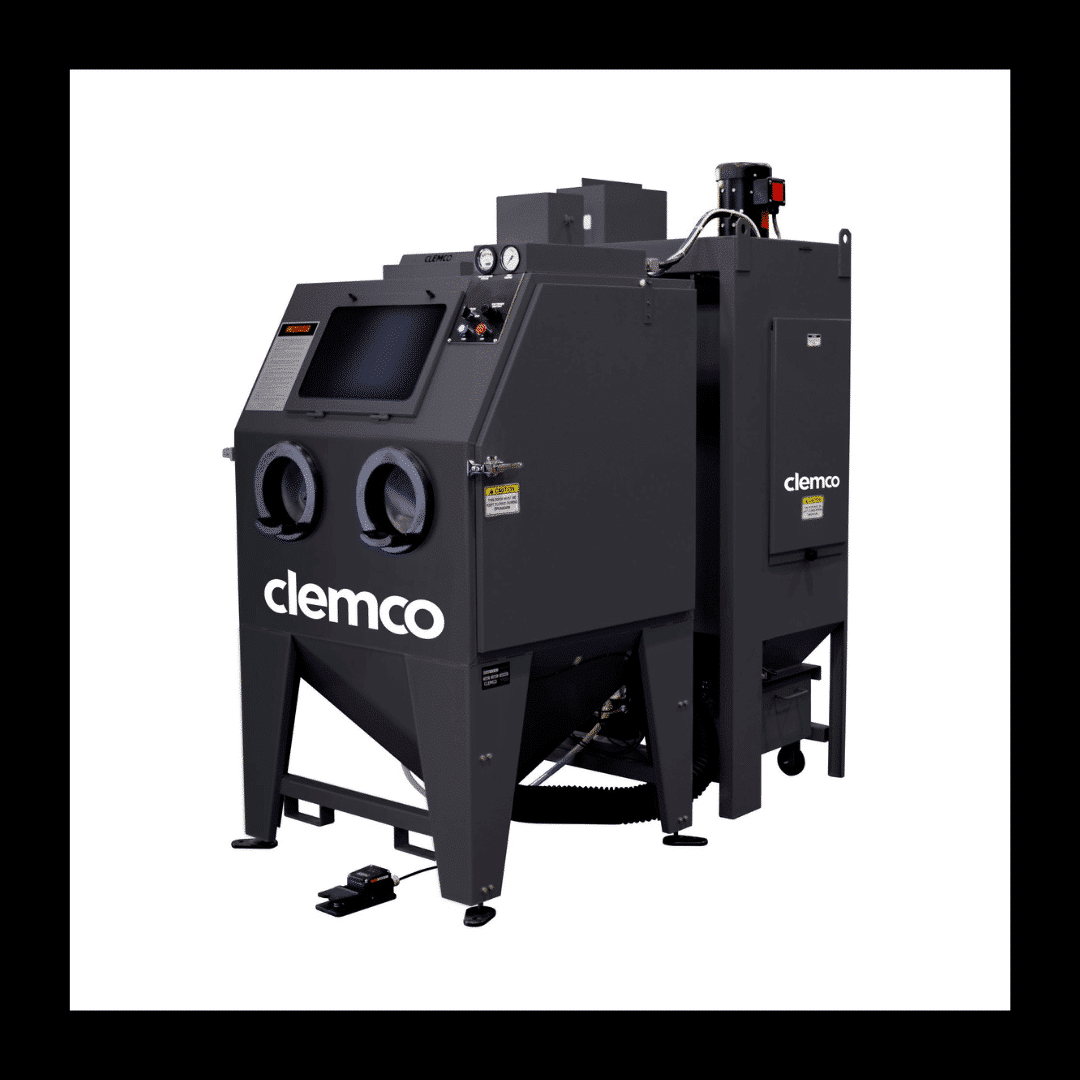
A versatile solution for controlled abrasive blasting, and increasingly the place where operations are finding leverage on labor costs and part consistency. Blast cabinets range from fully manual to lights-out automated depending on your volume and throughput requirements.
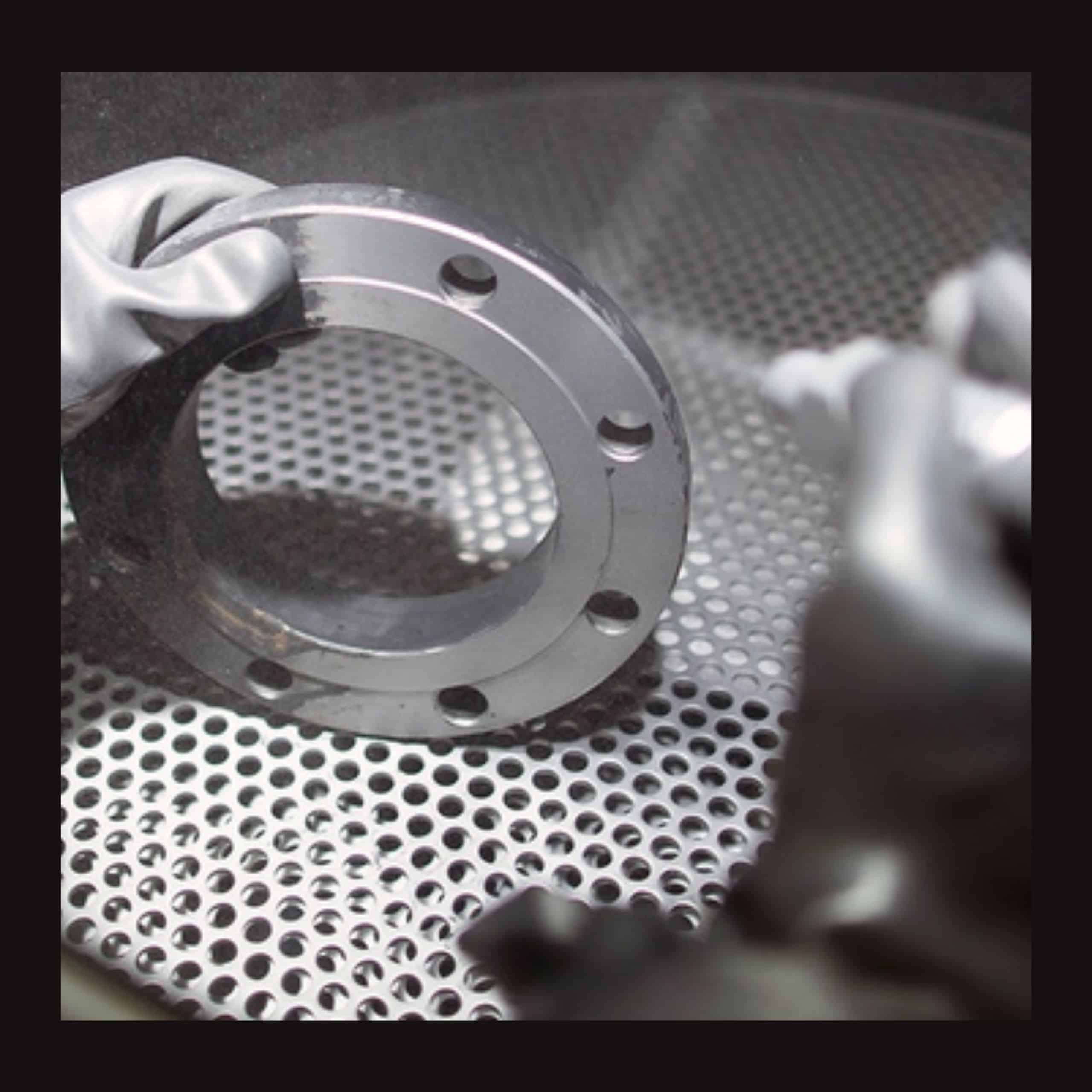
- Manual cabinets use a blast gun through glove ports, giving operators direct control. Well-suited for small batches, detailed surface work, and in-process part inspection.
- Semi-automated cabinets use a basket or tumble configuration to rotate parts through the blast zone without operator involvement. A practical middle ground for small to medium parts processed in volume.
- Fully automated systems eliminate manual handling entirely. Indexing turntables, pass-through conveyors, and robotic blast cells deliver precise, repeatable coverage on complex geometries — the right answer for operations dealing with labor shortages or growing throughput demands.
Wheel Blasting
Uses a high-speed centrifugal wheel to propel media without compressed air. Built for high-volume, automated production environments where consistency and throughput are the priority. Tumble blasters handle batches of small to medium parts. Wire mesh belt systems process flat or irregular parts. Skew roll systems handle cylindrical objects like pipe and bar stock. If your production line needs parts processed quickly and consistently at scale, wheel blasting is usually the right answer.
Wet Blasting
Integrates water into the process, dampening dust and allowing for gentler, more controlled material removal. Valuable for sensitive substrates, tight dimensional tolerances, and environments where dry dust suppression is a compliance requirement.
Blast Rooms
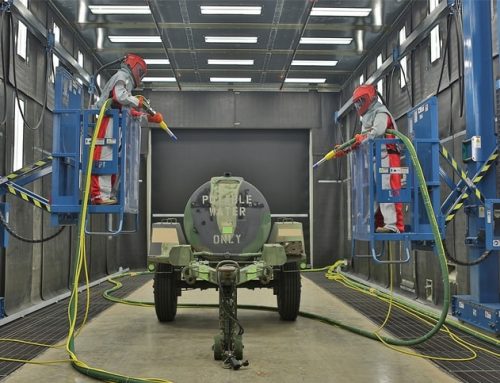
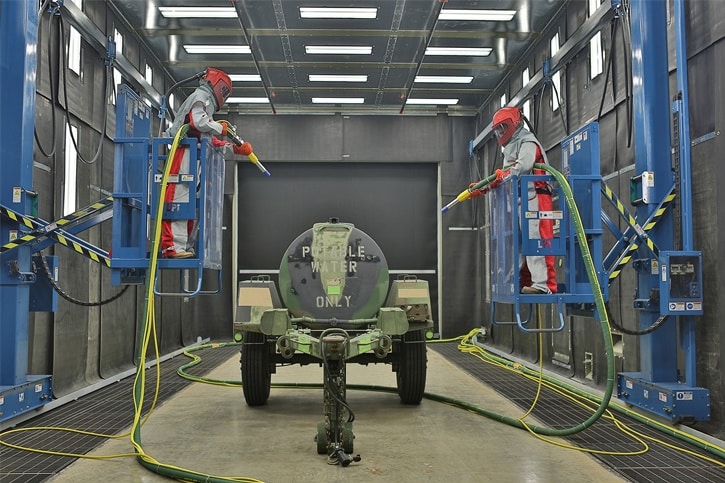
Bring all of these systems together at the largest scale. A properly designed blast room is a fully integrated system, where every component is spec’d against your specific part size, production volume, and media type. The enclosure, recovery system, dust collection, and workpiece handling all need to be engineered together from the start. Getting that integration right is what separates operations that run efficiently from those that run constantly behind.
How SurfacePrep’s Experts Help You Build the Right Solutions
Abrasive blasting decisions involve a lot of moving parts. Media type, equipment category, surface profile requirements, facility layout, and compliance specifications all have to line up. The cost of getting it wrong shows up in damaged parts, wasted media, and underperforming coatings.
This is where SurfacePrep’s approach sets itself apart from a standard distributor relationship.
With more than 50 locations across North America and the UK and over a decade of process development labs in the network, our team works alongside your engineers and production managers to understand your application and recommend a solution built for it. When you need to validate a process before committing to a capital investment, our Job Shop facilities can test sample parts and give you real-world data on media performance and surface profile results before you buy anything.
For complete blast room builds, we provide one-source accountability for the entire system. From abrasive selection and enclosure design through dust collection, media recovery, and startup training, there’s no finger-pointing between vendors because we own the entire integration. And for existing customers who need to reorder, troubleshoot, or get a technical question answered before a shift starts, our specialists are here.
Ready to Find the Right Solution for Your Application?
The right abrasive blasting system for your operation depends entirely on your specific requirements, and there’s rarely a one-size-fits-all answer. Whether you’re evaluating media for a new process or designing a blast room from the ground up, our team is ready to help you get there. Talk to a SurfacePrep specialist about your application today.